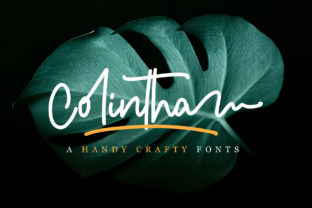
Colintha: A Font That Adds Personality to Branding
I recently found myself staring at a blank brand board, trying to decide which font would best represent the identity of a new café I was designing. The client wanted something warm, inviting, and slightly modern—something that felt personal but still professional. That’s when I came across Colintha. As a Script Handwritten font with a unique style, it immediately caught my eye. Its sweet and cool personality felt like the perfect match for the project.
Colintha for Café Branding and Logo Design
Testing Colintha on the logo draft was an instant hit. The font has a soft, handwritten feel that adds character without being too ornate. It’s not just a pretty face—it brings a sense of authenticity and warmth that aligns well with a café’s vibe. I used it as the primary typeface for the logo, pairing it with a clean sans serif font for the tagline. The contrast worked beautifully, creating a balance between personality and readability.
Colintha is particularly effective in small doses. As a display font, it shines in headlines and signage. I placed it on the café’s storefront sign and noticed how it drew attention from passersby. It felt like the right choice for a brand that wants to stand out in a busy neighborhood. The contemporary look of Colintha also gave the design a modern edge, which was exactly what the client was aiming for.
Colintha for Packaging and Product Labels
When it came to packaging, I needed a font that could communicate both style and clarity. Colintha’s unique style made it ideal for product labels. I used it on coffee bags and takeaway cups, ensuring the text was legible even at smaller sizes. The font’s subtle curves and elegant strokes added a touch of sophistication without overwhelming the design.
I also tested Colintha on a sample menu card. It looked great against a minimalist background, allowing the font to take center stage. The key was to use it sparingly—too much of a Script Handwritten font can be distracting, especially in print. But when used thoughtfully, Colintha enhances the visual hierarchy and makes the brand feel more approachable.
Colintha for Social Media Graphics and Website Headers
As part of the digital branding, I used Colintha for social media graphics and website headers. Its contemporary look translated well to online platforms, where a strong visual presence is crucial. I created a series of Instagram posts using the font for captions and headers, and the response was positive. The font’s playful yet refined style resonated with the target audience, who appreciated its balance of charm and professionalism.
On the website, I used Colintha for the hero section and navigation menus. It added a cohesive feel to the overall design while maintaining readability. I paired it with a modern sans serif font for body text, ensuring a clear distinction between headline and supporting content. This approach helped keep the user experience smooth and intuitive.
Colintha for Editorial Design and Print Materials
For printed marketing materials, such as flyers and brochures, Colintha brought a fresh perspective. I used it in headlines and call-to-action sections, where its unique style helped draw the eye. The font’s soft curves and gentle flow made it feel natural on paper, which is essential for print projects.
I also experimented with Colintha in editorial layouts, using it for headings and subheadings. Its Script Handwritten nature allowed for creative spacing and visual interest, which helped break up large blocks of text. However, I made sure not to overuse it, as it’s best suited for short-form text and accents rather than long paragraphs.
Colintha for Brand Consistency and Client Collaboration
One of the biggest challenges in any branding project is maintaining consistency across all touchpoints. With Colintha, I focused on using it strategically. I created a style guide that outlined its appropriate use cases, including when to pair it with other fonts and how to ensure it remains legible in different contexts.
When presenting the design to the client, I emphasized how Colintha contributes to brand recognition. Its unique style helps differentiate the café from competitors, while its readability ensures the message is clear. I also discussed font pairing options, suggesting a modern sans serif font for body text and a serif font for more formal sections. This flexibility allows the font to adapt to various design needs.
Colintha for Creative Studios and Small Business Owners
Whether you're working on a café, boutique, or handmade shop, Colintha offers a versatile solution for branding. Its Script Handwritten style gives a personal touch, making it ideal for creative studios and small businesses that want to stand out. The font’s contemporary look also appeals to a wide range of audiences, from young professionals to lifestyle-oriented customers.
For designers and entrepreneurs, Colintha is more than just a font—it’s a tool that can elevate your brand’s visual identity. It’s easy to integrate into existing design systems and works well with both digital and print formats. When used correctly, it adds personality and character to every project.
Colintha for Real-World Applications and Design Flexibility
After testing Colintha across multiple design scenarios, I can confidently say it’s a font worth investing in. It’s not just about aesthetics—it’s about functionality. Whether you’re designing a logo, packaging, or social media graphics, Colintha provides a reliable and stylish option that enhances your brand’s visual appeal.
If you’re looking for a Script Handwritten font that balances creativity with readability, Colintha is an excellent choice. It’s designed to work in real-world applications, offering versatility and flexibility for a wide range of design projects. From branding to web design, this font can help you create a cohesive and memorable visual identity.